4694Natural Beauty of Placer River Trail Bridge

Engineered Wood Shapes Washington State History
Eleven 55-foot-high reinforced concrete arches accentuate the façade of the Washington State History Museum in Tacoma..
View Case Study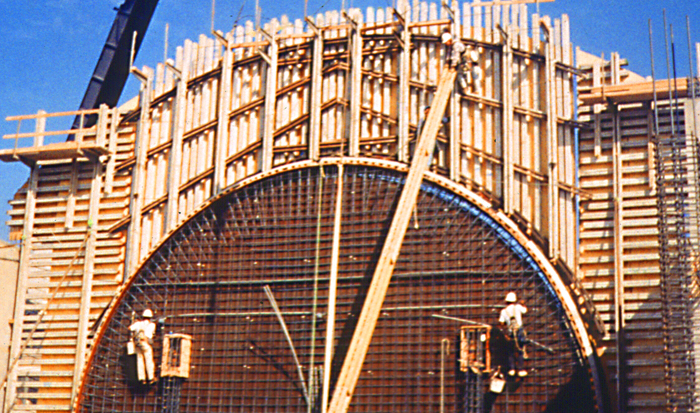
Historical Stadium Meets Modern Standards with Overlaid Plywood Forms
Innovative use of concrete formwork was part of a massive renovation project at the University of California. Built in 1923, the aging, historic California Memorial Stadium, the renovation brought it up to modern standards, which included a seismic retrofit.
View Case Study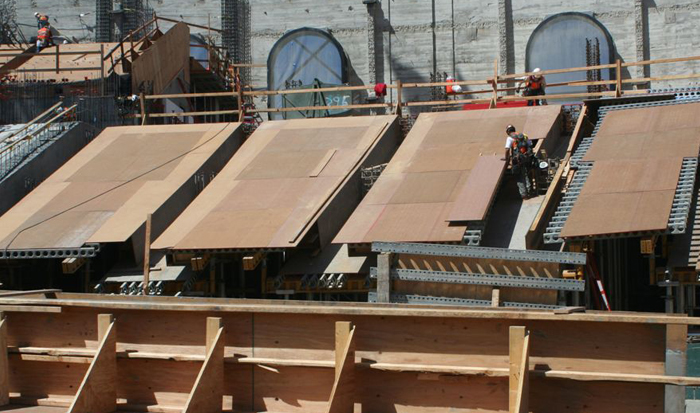
Engineered Wood Formwork Proves Cost-Effective, Customizable
MDO plywood panels are easy to cut to cut to size, proving a cost-effective solution for the concrete formwork in this new apartment building. 19mm panels were selected.
View Case Study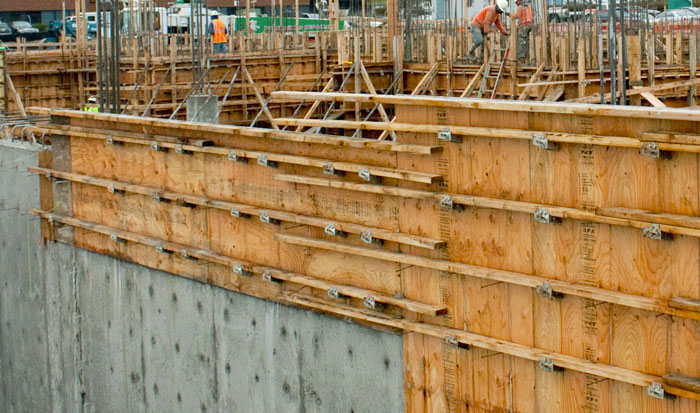
California Apartments Showcase Value Engineering
When cost held up this 120-apartment complex, the design was re-engineered with glulam and wood-framed shear walls. This involved I-joist compatible glulam beams and double-sided wood structural panel portal frames using force transfer around openings (FTAO), a method of shear wall analysis popular in California.
View Case Study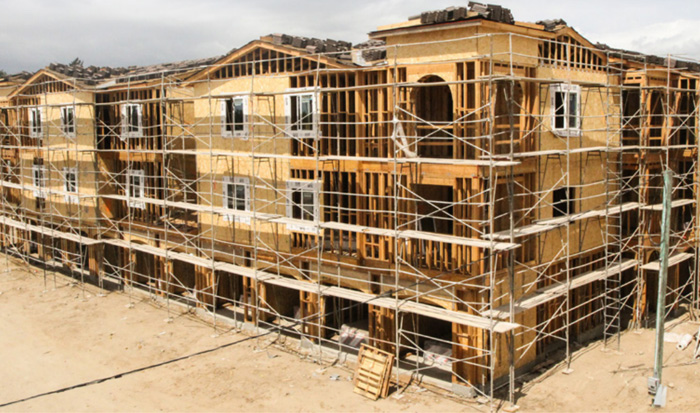
Scenic Setting for Cross Laminated Timber Office
Canada’s scenic Kelowna region is the setting for this cross-laminated timber design, respectful of surroundings, yet modern in its angles and appearance. CLT is ideal with its slim profile, fire resistance ratings, ease of installation and beauty. Incorporates a glulam post and beam frame.
View Case Study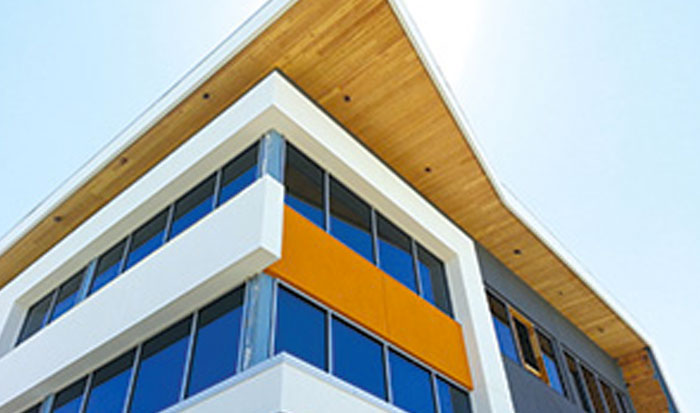
Natural Beauty of Placer River Trail Bridge
Set in the remote Alaskan forest, this is the longest clear span glulam timber truss bridge in North America. The design was chosen for its natural beauty, cost effectiveness and durability. The 280-foot camelback truss bridge had to be high enough to allow icebergs to float underneath without a collison.
View Case Study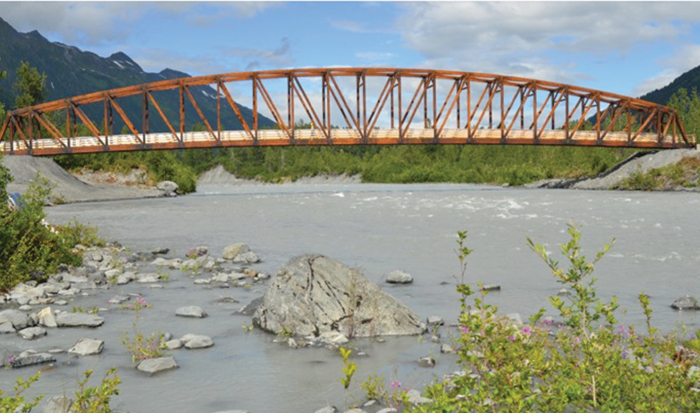
Cathedral of Christ the Light
Innovative computer modelling, backed by field tests, were used to ensure this massive glulam and glass structure offered high strength and ductility. It was to be located less than eight miles from a major fault zone (Oakland, California).
View Case Study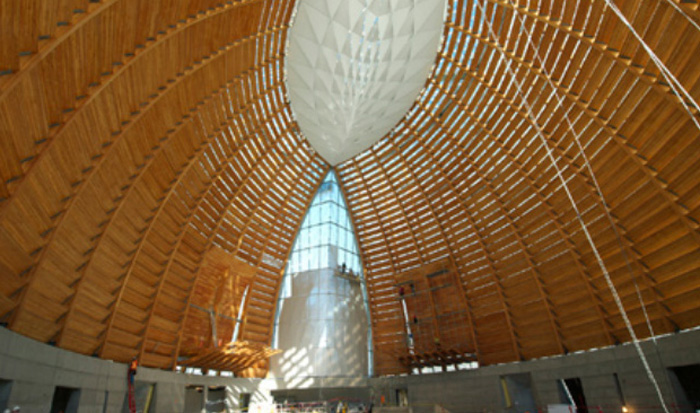
Portland’s One North Development Connects Vision with Community
The design of this office development focuses on the use of engineered wood (from glulam beams to plywood shear walls) to deliver both energy efficiency and sustainability. The use of glulam as a frame for the structures taps into its carbon-sequestration capabilities as well as offering aesthetic appeal.
View Case Study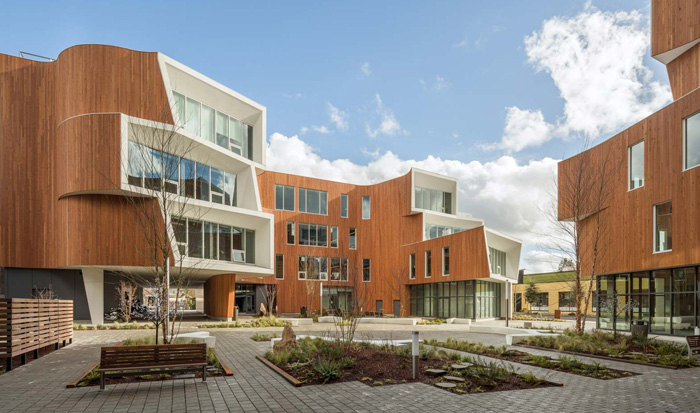
Largest Cross Laminated Timber Structure
Constructing the largest cross laminated timber (CLT) building in the US took just 14 months, including 12 weeks for the timber erection. This saved 4 months construction time and 4% in costs. It included a CLT roof, floors and simplified façade, with glulam post and beam frame and columns.
View Case Study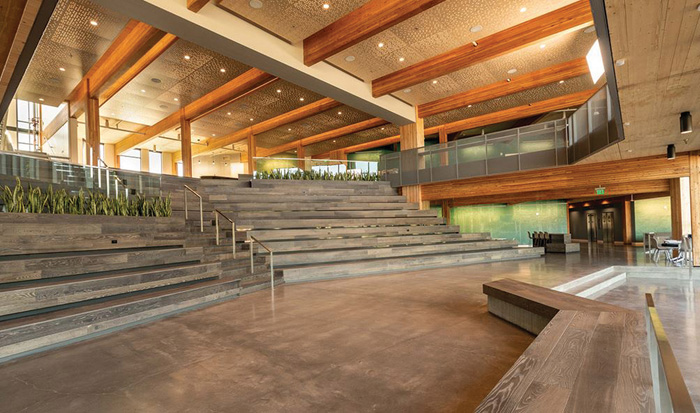
Mass Timber Delivers Green Building
Mass timber was chosen to reflect First United Bank’s sustainability initiative. The design for its new 8,500-square-foot bulding used cross laminated timber (CLT) panels for the roof, as well as glulam columns and beams. This made the build phase 50% to 60% faster than concrete or steel.
View Case Study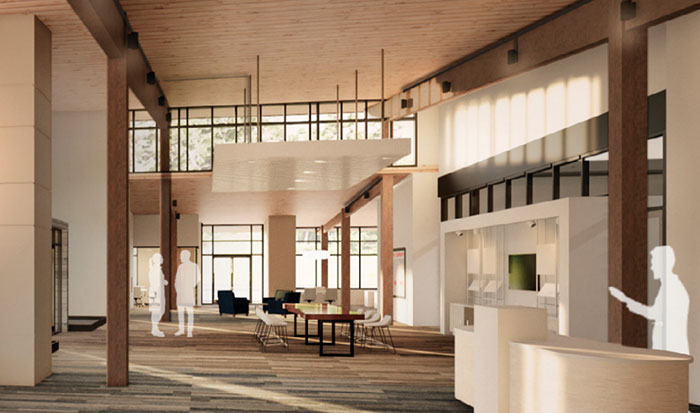
Beauty and the Budget
With glulam its focal point, the design of this US company building combined the structural and aesthetic capacities of engineered wood with its cost effectiveness. Prefabrication helped to reduce labour costs and construction time, with the overall bulding taking just seven months, and the glulam elements under 30 days.
View Case Study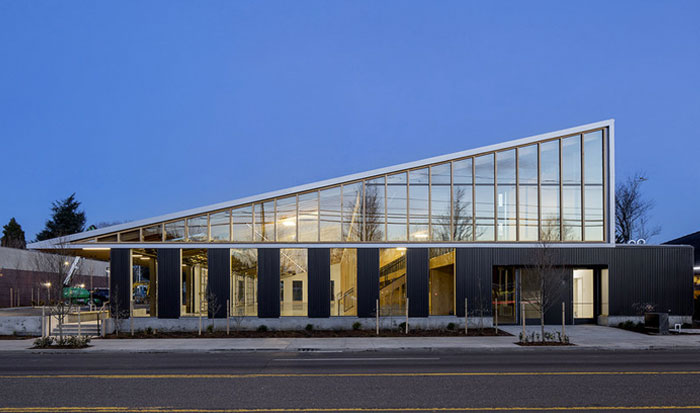
Engineered Wood’s Carbon Footprint Solution
Changing from steel to engineered wood offered a lower carbon footprint for a roof with span and load capacities within an open and airy store layout.
View Case Study